In the field of modern rice cultivation, how to improve planting efficiency, reduce labor costs, and ensure the survival rate of seedlings has always been a core concern for farmers and agricultural cooperatives. With the popularization of agricultural mechanization, the rice planter has become an indispensable mainstay in the fields. From the initial manual rice planter to today's intelligent automatic rice planter, different rice planting machine models exhibit significant differences in structural design, working principles, and application scenarios.
This article will provide an in-depth analysis of the core characteristics of various types of paddy planting machine from a professional technical perspective, helping you choose the most suitable mechanical rice planter based on planting scale and terrain conditions.
Core Model Analysis: Technical Evolution from Manual to Fully Automatic
Rice planting machinery is mainly divided into three categories based on the degree of automation and power source, each solving different production pain points.
1. manual rice planter
As a miniaturized, non-powered manual rice planter, it mainly relies on human pulling or pushing, completing seedling taking and planting actions simultaneously through a mechanical linkage mechanism.
Applicable Scenarios: Hilly areas, terraces, and traditional rice-producing areas where plots are small and large vehicles cannot enter.
Core Advantages: Extremely simplified structure, maintenance costs close to zero, light weight, and strong adaptability to muddy fields with deep mud feet. It successfully solves the problem of high-intensity bending labor and is an entry-level rice planting machine for small farmers transitioning to mechanization.
2. mechanical rice planter
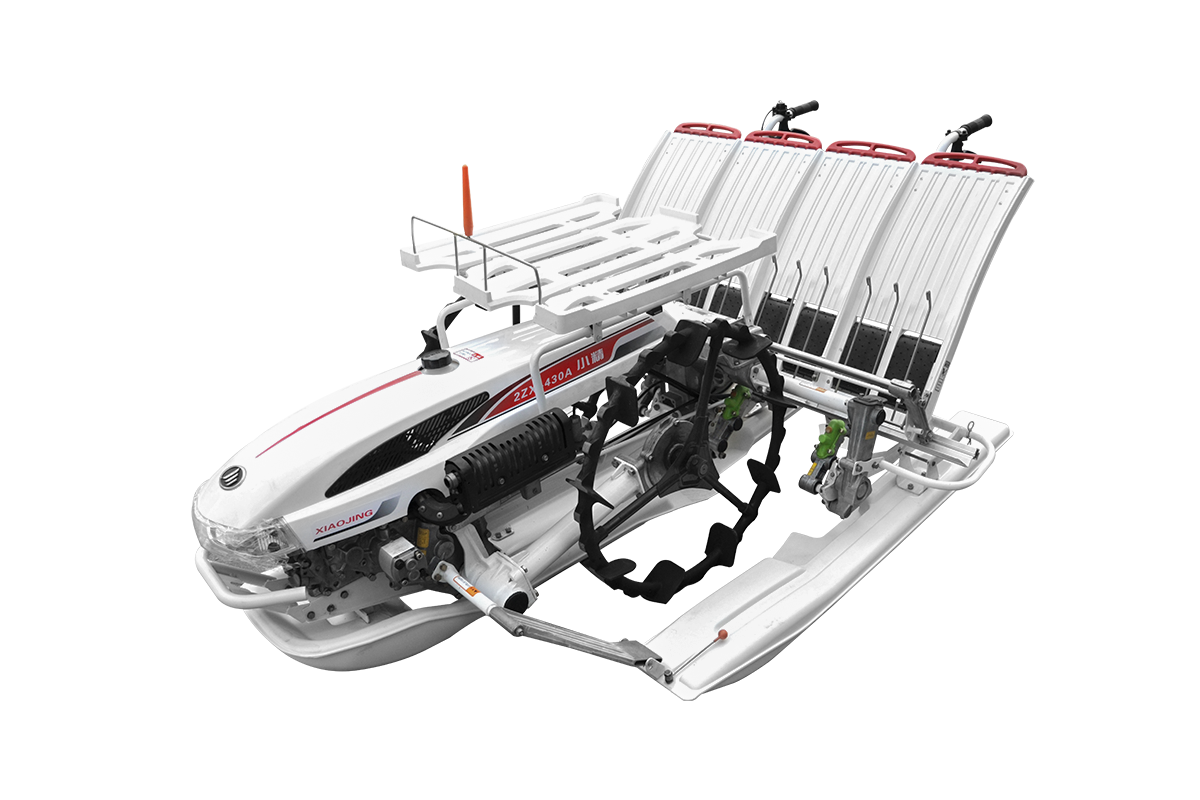
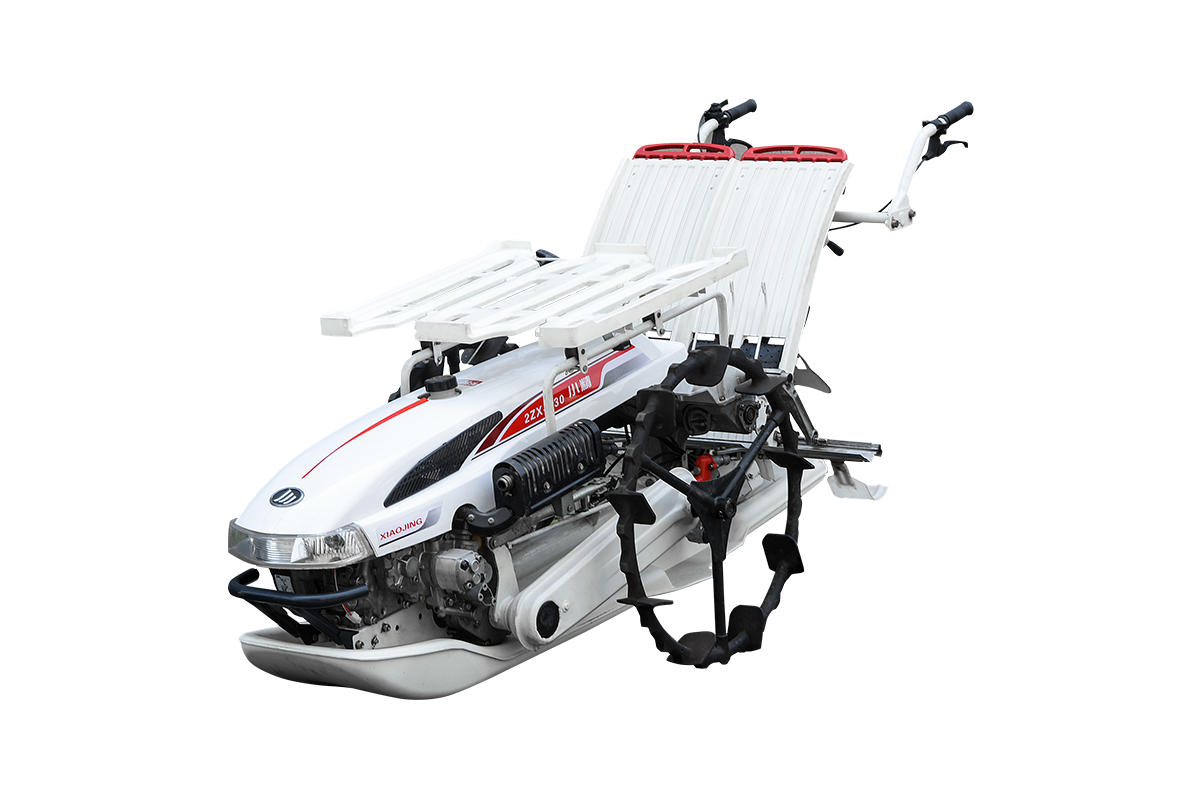
This is currently the most widely used agriculture rice planting machine, usually equipped with a gasoline or diesel engine, divided into walk-behind and ride-on types.
Working Principle: The engine drives the travel wheels forward while power is delivered to the planting arm through a transmission box. Rotary or oscillating planting claws accurately pick up a fixed number of seedlings from the seedling tray and insert them into the soil at a specific angle.
Performance Features: This type of paddy planting machine has fixed wide and narrow row spacing adjustment functions, fast planting speed, consistent depth, and low missing rate.
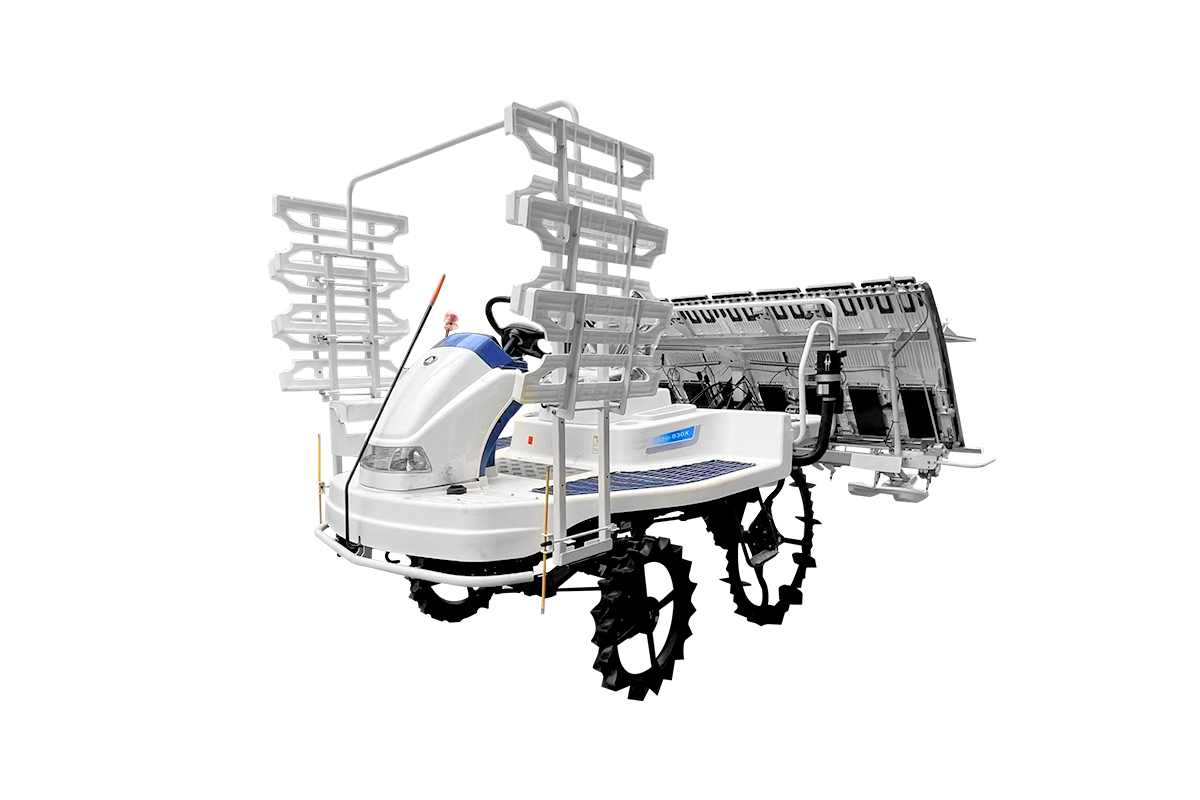
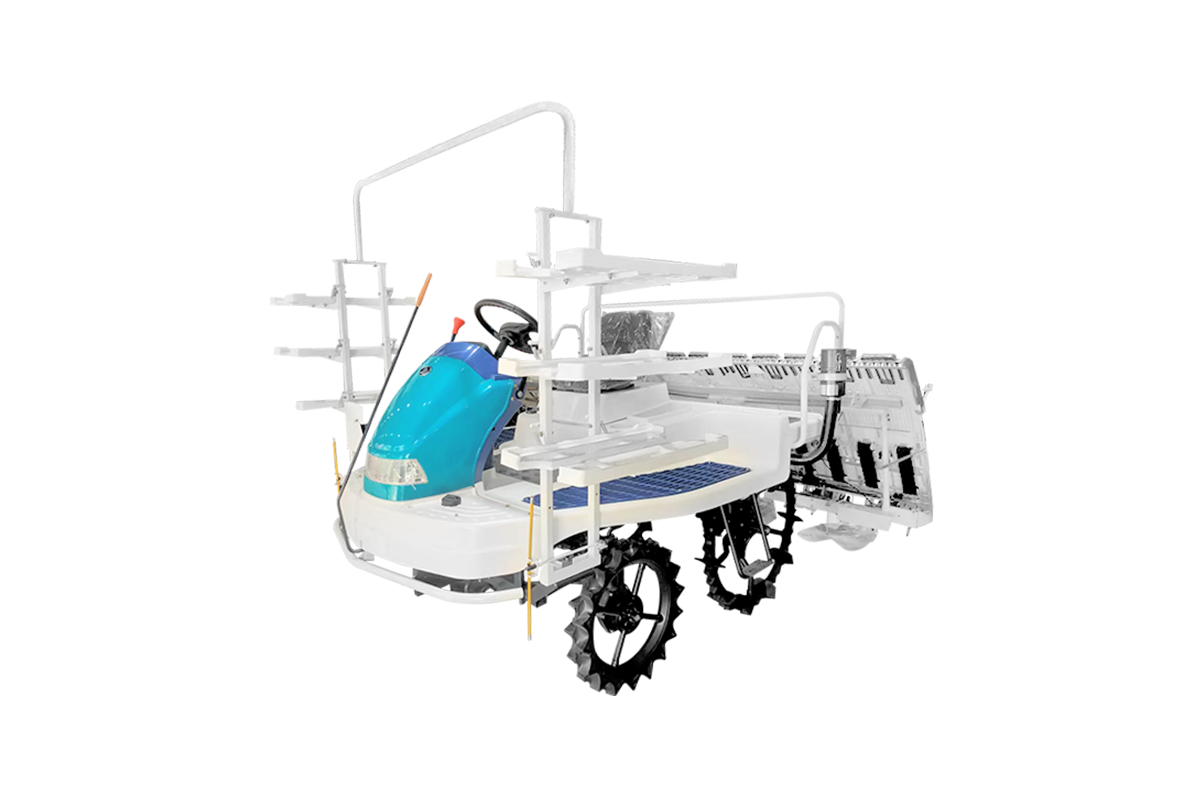
3. automatic rice planter
As a high-end automatic rice planting machine, it integrates modern control technology and usually features automatic navigation, row-following operations, and fully automatic lifting functions.
Technical Highlights: Operators only need to make simple settings at the head of the row, and the automatic rice planter can travel in a straight line along the preset route relying on high-precision positioning, automatically adjusting the planting depth according to the terrain fluctuations.
Pain Points Solved: It significantly reduces the dependence on skilled operators, avoids re-planting or missing caused by manual driving, and greatly improves land utilization and operation standardization.
Mainstream agriculture rice planting machine Parameter Comparison
To give you a more intuitive understanding of the performance differences between different levels of rice planting machine in actual operation, the core parameter comparison table of mainstream configurations on the market is listed below:
| Technical Parameters |
manual rice planter |
Walk-behind mechanical rice planter |
Ride-on automatic rice planter |
| Number of Rows |
2 / 4 rows |
4 / 6 rows |
6 / 8 rows |
| Row Spacing (mm) |
250 - 300 (Fixed) |
300 |
300 (Some models 250 adjustable) |
| Hill Spacing Range (mm) |
Relies on push speed |
120 - 180 (Multi-stage adjustable) |
100 - 220 (Stepless or multi-stage) |
| Planting Depth (mm) |
10 - 35 (Manual mechanical) |
10 - 53 (Hydraulic feedback) |
10 - 60 (Electronic sensor compensation) |
| Efficiency (Acres/Hour) |
0.1 - 0.2 |
0.4 - 0.8 |
1.3 - 2.5 |
| Power Configuration |
Manual Drive |
4.0 - 5.5 HP Gasoline |
15 - 25 HP Diesel / Lithium Battery |
| Intelligent Features |
None |
Mechanical profiling |
GPS/Beidou, Auto-steering, Balance |
Solving Field Problems: How to Maximize the Quality of paddy planting machine Operation
When operating an agriculture rice planting machine in practice, farmers often encounter technical problems such as missing hills, seedling injury, and floating seedlings. To solve these problems, it is necessary to focus on adjustment from three professional dimensions:
Seedling Specifications and Carpet Formation
Whether it is an automatic rice planting machine or a traditional mechanical rice planter, there are strict requirements for seedling quality. Seedlings must have roots intertwined into a carpet shape and not easily fall apart when lifted. The seedling height should be controlled between 12-25 cm. If it is too high, it is easy to fall over after planting; if it is too low, it is easily submerged by muddy water.
Planting Depth and Longitudinal Seedling Volume
The core of tuning a rice planter lies in balancing "depth" and "seedling volume." The depth is generally controlled at 1.5-3 cm. Too deep will inhibit tillering and affect later yield; too shallow will cause seedlings to float. By adjusting the horizontal and vertical movement stroke of the seedling delivery board, the number of seedlings per hill can be precisely controlled.
Mud Depth and Field Sedimentation Time
Before using an automatic rice planter, the quality of field preparation is crucial. The mud must have sufficient sedimentation time (1-2 days for sandy loam, 2-3 days for clay) to reach a state of "clear water on top, paste-like underneath, and crust on the surface." Excessive water depth will prevent the planting claws from accurately sensing the soil layer, leading to floating seedlings; if the water is too shallow or the field is too dry, it will increase the operating resistance of the rice planting machine and cause mud to smear the leaves.






 [email protected]
 No. 1819, Renmin West Road, Cao'e Street, Shangyu District, Shaoxing City, Zhejiang Province, China